
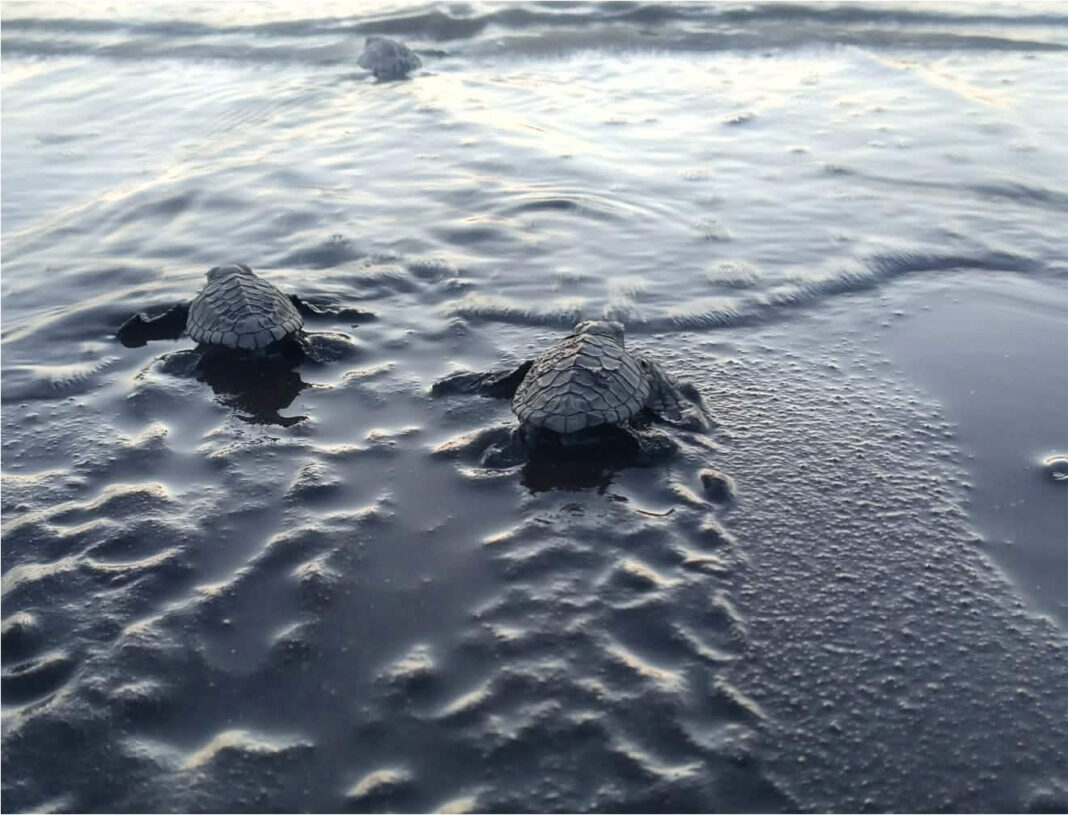

SARIAYA, QUEZON — In the hushed, golden light of a secluded shoreline, a small miracle unfolded this week. Eighty-six olive ridley sea turtle hatchlings made their frantic, instinctive dash toward Tayabas Bay, marking the successful end of a journey that began two months ago.
The hatchlings emerged from a clutch of 100 eggs laid on December 16, 2025. These eggs hatched and were released on the morning of January 3. Under the watchful eye of dedicated Bantay-Pawikan volunteer Edwin Frias, the nest achieved an impressive 86% hatch rate.
Unlike the crowded, high-profile releases often seen in tourist spots, this event was a masterclass in conservation best practices. Frias opted for a silent, natural approach, allowing the tiny creatures to navigate the sand without the disorientation caused by flash photography or human noise.
“The 86 hatchlings were remarkably agile,” Frias noted. “By letting them crawl naturally to the sea in a quiet environment, they didn’t seem disoriented. They were faster and more vigorous in finding their way to the waves.”
The Cycle Continues: A Midnight Surprise at Paminus Beach
As one generation reached the water, another was being secured. The momentum of Sariaya’s conservation efforts received a fresh boost late Sunday night.
Around 10:30 PM on February 2, 2026, customers at Paminus Beach Hut Rentals in Sitio Kaingin, Bignay 2, were treated to a rare spectacle. A mother sea turtle emerged from the surf to lay her eggs along the shoreline.
Arzadon Oli, recognizing the importance of the event, ensured the nesting site was protected. Early the following morning, a total of 101 freshly laid eggs were officially turned over to Edwin Frias.
Why the Transfer Matters
The eggs have now been transported to the local Bantay-Pawikan Nursery for a 45-to-60-day incubation period. This manual transfer is vital for several reasons:
Protection from Predators: Stray dogs and ghost crabs often raid nests on open beaches.
Tide Safety: Eggs laid too close to the shoreline risk being drowned by high tides.
Temperature Control: Hatcheries provide a stable environment to ensure a healthy male-to-female ratio among the hatchlings.
The continuous cycle of releases and new nestings highlights the growing environmental consciousness in Sariaya. With volunteers like Frias and vigilant citizens like Oli, the “Guardians of the Sea” are ensuring that the shores of Quezon remain a sanctuary for these endangered marine icons.| – Photo by Edwin Frias | Text by Edwin Frias and Jay Lim
Originally posted by Kasama ng Kalikasan, a radio program of environmentalist group Tanggol Kalikasan. The Metro Times is a member of BNN Media Group which originated from Tanggol Kalikasan and its forerunner, Babilonia-WIlner Foundation (BWF).