
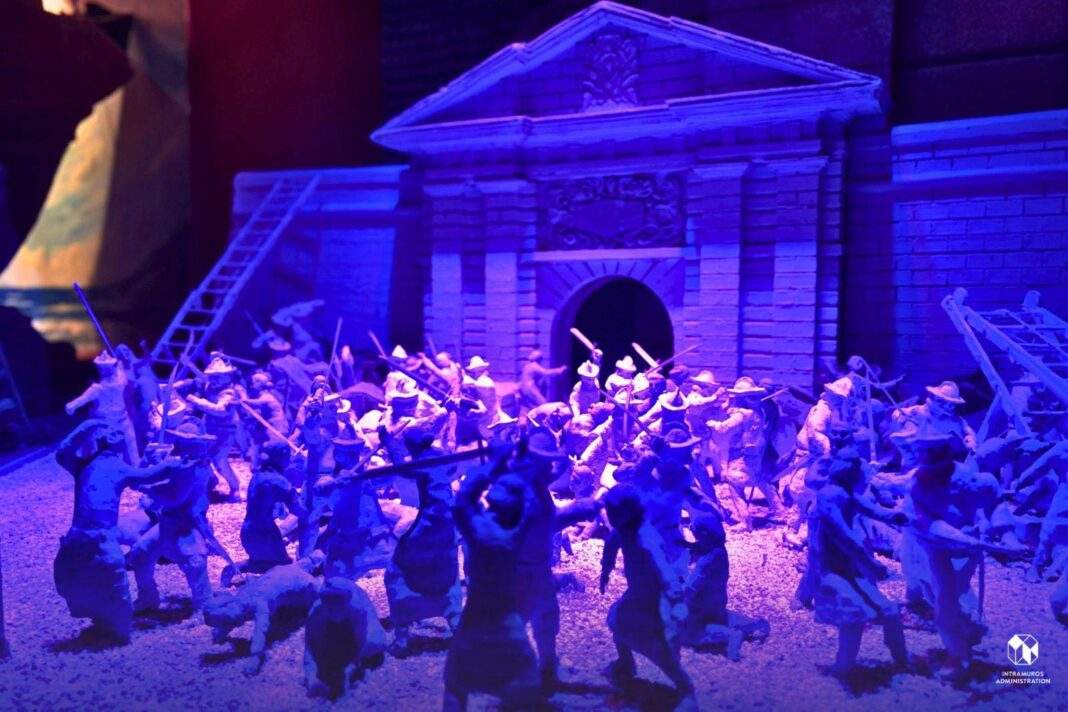

Chinese new year normally falls mid February when enthusiasts in red color shirts flock the streets of Binondo for the special performances of Dragon/Lion dances, cuisine, lucky charms, prosperity fruits, and boxes of “tikoy”.
Binondo is considered as the world’s first and oldest Chinatown that was established in 1594 as a permanent settlement for Chinese immigrants, particularly those who had converted to Catholicism and intermarried with indigenous Filipinos.
It was positioned near Intramuros, but across the Pasig River, so that colonial rulers could keep a close eye on their migrant subjects amid fears of an imminent invasion from China.

In the years that followed, Binondo became the first stop for Chinese immigrants who arrived in Manila in search of a new life. It is the foundation of the Filipino-Chinese community amidst multiple occupations by our colonizers.
Red is also a very emotionally intense color of fire and blood as it is associated with war, death and danger. Behind the joyful celebrations is the sad series of painful Chinese massacres in Philippine history.
The Chinese massacres in Manila refer to several large-scale historical killings of the Chinese population by Spanish colonial authorities (1603, 1639, 1662) and during the 1945 Japanese occupation. These events, driven by fear, tension, and war, resulted in the deaths of thousands of civilians.
The 1603 massacre remains as one of the bloodiest episodes in Philippine colonial history.
The rebellion was a large-scale uprising of ethnic Chinese residents in Manila against Spanish colonial rule that was fueled by deep-seated mutual suspicion and economic friction.
The Chinese outnumbered the Spanish by approximately ten to one (roughly 20,000 Chinese to 2,000 Spaniards) causing the colonial government to fear a coup.
Chinese residents faced heavy taxation, restricted movement (confined to the Parian or Binondo), and general persecution by the Spanish administration.
In early 1603, three Chinese Mandarins arrived in Manila searching for a legendary “mountain of gold”. This visit convinced Spanish authorities that a Chinese invasion was imminent.
The rebellion broke out on October 3, 1603 and lasted for approximately three weeks. Conflict began in the Chinese settlements of Binondo, Quiapo, and Tondo.
Battles and subsequent massacres later spread to Laguna de Bay, Batangas, and Pampanga as rebels fled, resulting in the slaughter of an estimated 15,000 to 30,000 Chinese people.
In the 1639 Chinese massacre, also known as the Second Sangley Rebellion, roughly 17,000–22,000 ethnic Chinese residents were killed by Spanish forces and their allies.
The rebellion was driven by, among other things, harsh treatment , forced labor, poor conditions and heavy taxes imposed by Spanish authorities on the Chinese population , particularly in Calamba, Laguna.
The rebellion spread quickly toward Manila, but the poorly armed rebels could not withstand the Spanish forces with superior firepower, leading to a massive slaughter, starvation, and a subsequent three-month siege of holdouts.
The 1662 Chinese massacre was driven by panic following a threat from the Chinese warlord Koxinga (Zheng Chenggong), who had just expelled the Dutch from Taiwan and demanded the Philippines pay him tribute.
The Governor-General, fearing that the Chinese in Manila would aid the invasion, ordered the fortification of Manila. Following the initial attacks, the Spanish ordered all non-Christian Chinese to leave or be killed. Approximately 1,300 left on a single ship, and others perished in the mountains. While many fled, around 20,000 Chinese were massacred.
During World War II, the Chinese community was specifically targeted by Japanese forces due to their support for the resistance in mainland China and their active role in local guerrilla movements in the Philippines.
The major massacre occurred in San Pablo, Laguna (February 24, 1945 ) where approximately 650 to 700 Chinese residents were killed by bayoneting and beheading; Manila (February – March 1945), Japanese troops conducted door-to-door executions in Manila, including Chinese community in districts like Binondo during the month-long Rape of Manila; Calamba (February 1945) where approximately 5,000 to 6,000 civilians in Calamba, Laguna were killed including many Chinese males who were rounded up at the local church before being executed.
These historical events are documented and depicted in Bahay Tsinoy museum in Intramuros, Manila which features exhibits detailing the life, culture, and often tumultuous history of the Chinese community in the Philippines, including the Spanish-era massacres and their subsequent integration into Filipino society.
The museum, managed by the Kaisa Para Sa Kaunlaran foundation, uses life-sized dioramas and wax figures to depict these tragic episodes as part of the broader Chinese-Filipino history.
(Atty. Dennis R. Gorecho is the junior partner of the Sapalo Velez Bundang Bulilan Law Offices. For comments, e-mail info@sapalovelez.com, or call 0908-8665786.)