
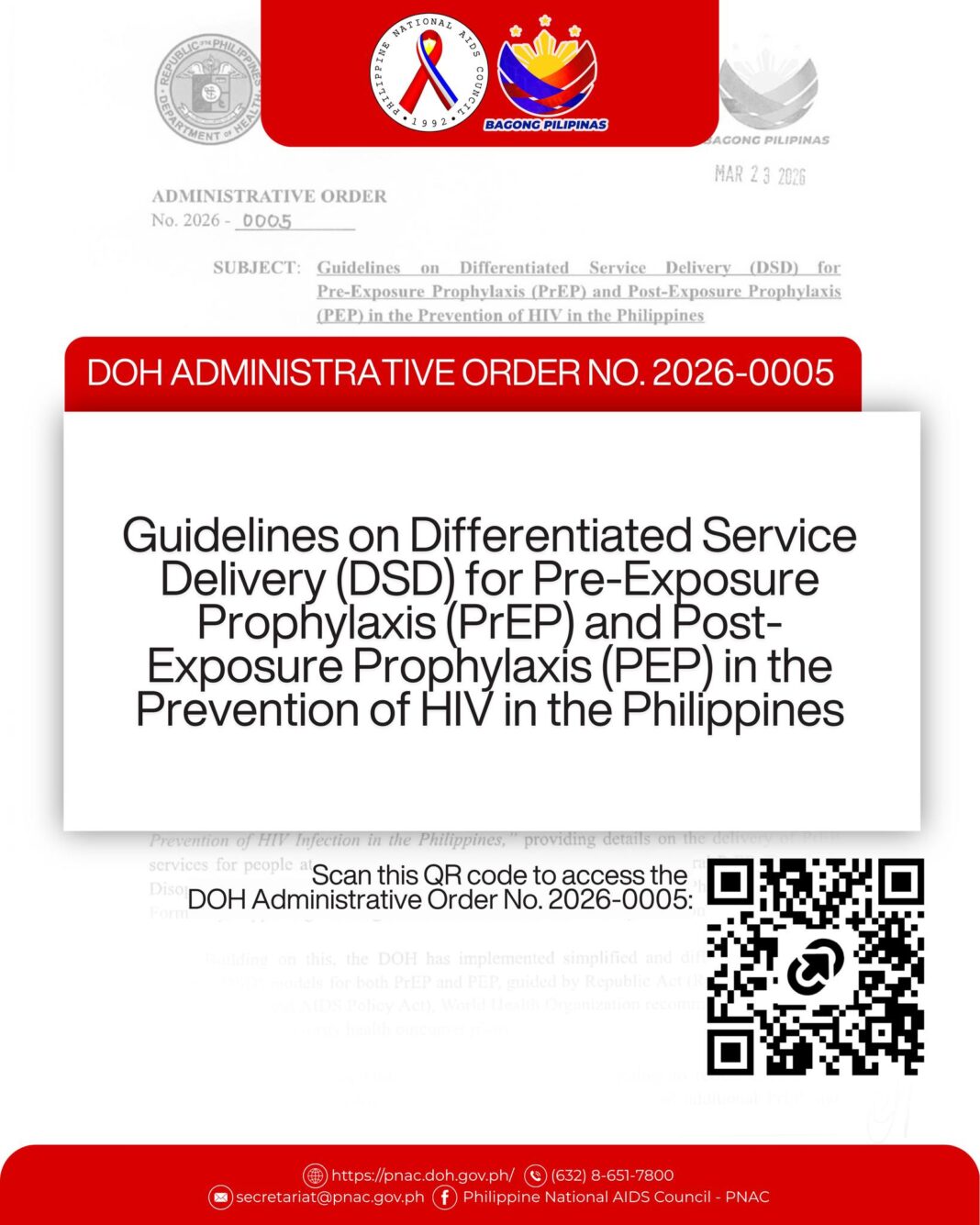

MANILA — In a decisive move to curb what is currently the fastest-growing HIV epidemic in the Asia-Pacific region, the Department of Health (DOH) has released Administrative Order No. 2026-0005, formalizing new guidelines for the differentiated delivery of life-saving HIV prevention services.
The order, titled Guidelines on Differentiated Service Delivery (DSD) for Pre-Exposure Prophylaxis (PrEP) and Post-Exposure Prophylaxis (PEP) in the Prevention of HIV in the Philippines, seeks to decentralize access to HIV prevention beyond traditional hospitals. By utilizing community-based centers, individual pick-ups, and virtual platforms, the DOH aims to avert an estimated 43,000 new HIV cases by 2030.
As of November 2025, the Philippines reports an average of 55 new HIV cases daily, bringing the national total to 162,056 cumulative cases. Data shows a staggering 550% increase in annual new infections between 2010 and 2024.
The new policy prioritizes “key populations” most at risk, including males having sex with males (MSM), transgender women (TGW), sex workers, people who inject drugs (PWID), and young people aged 15-24. It also addresses “vulnerable populations” such as migrant workers, pregnant women, and persons deprived of liberty (PDL).
PrEP and PEP—medications that can halt HIV seroconversion by almost 99%—will now be integrated into broader health services, including reproductive health, maternal-child care, and TB control programs.
Under the new General Guidelines, the DOH mandates that: “All HIV healthcare providers shall institutionalize and promote PrEP and PEP as an integral, beneficial, and empowering choice for combination HIV prevention.”
The order further emphasizes that these services “shall be offered and delivered free from discrimination, stigma, and bias.”
A cornerstone of the 2026 guidelines is the shift toward Differentiated Service Delivery (DSD). This model allows for task-sharing and peer-led services, ensuring that medicine reaches users through public and private clinics, as well as community-led organizations (CLOs).
To maintain safety, the DOH requires all participating facilities to ensure timely encoding in the One HIV, AIDS, and STI Information System (OHASIS). “Health facilities involved in PrEP and PEP service delivery shall include community-led monitoring inputs and contributions, where members of the key population and civil society organizations identify issues or challenges of the HIV program that are not part of routine reporting (e.g. policies, finance, service quality, stigma and discrimination).”
The DOH Central Office and Centers for Health Development (CHDs) are tasked with allocating specific budgets for the drug supply and capacity building. While the DOH remains the primary source of funds, Local Government Units (LGUs) are now encouraged to “procure FDA-registered PrEP and PEP drugs based on their respective annual operational plans as an augmentation to centrally-procured PrEP and PEP drugs.“
This Administrative Order takes effect immediately, applying to all DOH units, LGUs, and private health providers nationwide.| Sheenalei Briana G. Rayos