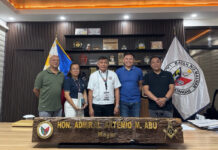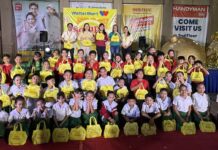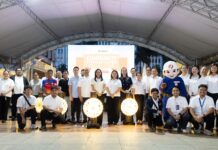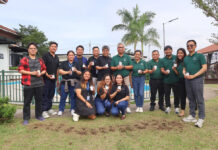

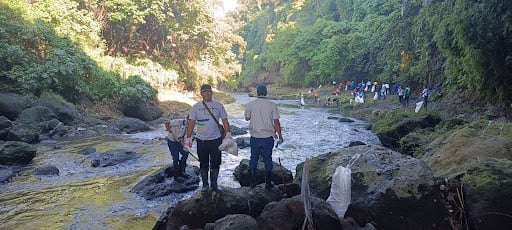

First Philippine Industrial Park (FPIP), through its water services arm First Industrial Township Water Inc. (FITWI), has formalized a partnership with Barangay Poblacion 1 in Sto. Tomas City, Batangas to bolster efforts in reducing river pollution and enhancing environmental stewardship in the San Juan River. The collaboration was sealed through a Memorandum of Agreement signed on October 24, 2025.
Immediately after the signing, FPIP installed a waste trap system along the Poblacion 1 segment of the river. The system is designed to intercept floating solid waste—including plastics and debris—before it enters larger waterways. The installation forms part of FPIP’s broader environmental protection program anchored on innovation, community participation, and long-term sustainability.
Engr. Jeremaine Esguerra, FPIP and WRM General Manager for Water Resources Management, emphasized that the project reflects FPIP’s commitment to developing practical and sustainable environmental solutions. “This waste trap is both cost-effective and community-based. Beyond protecting the river, we hope it empowers residents to take an active role in maintaining the system and preserving their local environment,” Esguerra said.
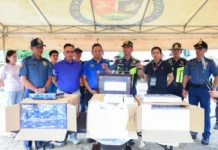
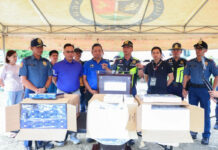
To ensure continuity, FPIP conducted hands-on training for barangay officials and community volunteers on the proper use, monitoring, and upkeep of the waste trap.
Local officials welcomed the project, citing its relevance to flood mitigation and river cleanliness. Barangay Chairman Alvin Carpio noted how the trap helps prevent waste accumulation, particularly during sudden water surges brought by rainfall. Sto. Tomas City Administrator Atty. Christian Cantera likewise commended FPIP, underscoring the shared responsibility among neighboring communities connected by the San Juan River system.
The initiative coincided with simultaneous river cleanup activities in Barangay Poblacion 1 and within FPIP premises. A total of 138 volunteers collected 869 kilograms of plastics and other waste materials.
These efforts fall under FPIP’s regeneration and decarbonization program, which promotes community engagement, natural resource protection, and a cleaner environment for future generations.|