

MORE than ₱813 billion in government funds earmarked for priority programs remained unused by 2024, exposing deep weaknesses in oversight, legal frameworks, and budget execution, according to a study by the Congressional Policy and Budget Research Department (CPBRD).
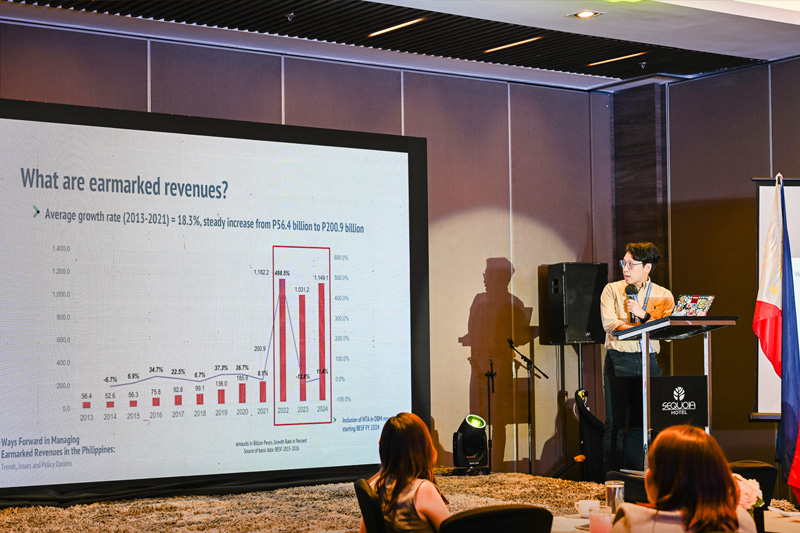
The findings were presented by CPBRD researcher Anthony Arvin Salazar during the 11th SERP-P Knowledge-Sharing Forum, which focused on transparency and accountability in public budgeting. Salazar likened earmarked revenues to trust funds intended to safeguard financing for critical projects—but warned that, in practice, they have become repositories of idle cash.
Earmarked revenues rose sharply from ₱56.4 billion in 2013 to ₱200.9 billion in 2021, with another spike in 2024 following the inclusion of the National Tax Allotment. Despite this growth, spending has lagged far behind. From 2014 to 2024, the average utilization rate stood at just 24.3 percent—or only 13.6 percent when adjusted for the tax allotment—leading to ballooning year-end balances.
Salazar stressed that the problem reflects systemic failures rather than fiscal prudence. Weak oversight, outdated rules, and ambiguous legal provisions have allowed funds to accumulate without being translated into timely public services.
He traced part of the issue to the legal framework governing Special Accounts in the General Fund, which lacks clear enforcement mechanisms. He cited the Malampaya Fund as a cautionary example, noting how vague provisions once allowed misuse until the Supreme Court restricted its use strictly to energy development.
Structural constraints further compound the issue. Although earmarked funds may be legally obligated, pooled cash resources are sometimes insufficient when needed. Overlapping expenditures—such as the Special Road Fund duplicating programs already funded under the General Appropriations Act—also dilute efficiency.
Salazar called for urgent reforms, including stronger monitoring, performance-based funding, and sunset clauses for earmarked programs. He underscored the importance of passing the proposed Budget Modernization Bill, which seeks to rationalize earmarks and ensure public funds are spent swiftly, transparently, and for their intended purpose.| – BNN Integrated News