

MANILA — A wave of risk aversion swept through the Philippine financial markets on Monday, March 23, as escalating Middle East tensions sent the local stock barometer crashing below the 6,000-level and dragged the peso to a fresh historical low against the US dollar.
The Philippine Stock Exchange index (PSEi) plummeted 1.98 percent to close at 5,899.18 points, while the broader All Shares index followed suit, declining by 2.04 percent to 3,276.59 points. The bloodbath was felt across the board, with every sectoral index ending the day in the red.
The Mining and Oil sector took the hardest hit, plunging a staggering 8.71 percent. Other notable declines included Holding Firms (down 2.99 percent), Property (down 2.98 percent), and Financials (down 2.50 percent). Industrial and Services sectors also saw losses of 1.16 percent and 0.95 percent, respectively.
Market analysts point to the volatile situation in the Strait of Hormuz as the primary catalyst for the sell-off.
“The local market plunged as the future escalation of tensions between the US and Iran weighed on investors’ sentiment. This comes as the two countries exchanged threats amidst the US’ demand for the complete reopening of the Strait of Hormuz,” Philstocks Financial noted in a market report.
Trading activity remained active with 1.4 billion shares changing hands, valued at PHP 8.1 billion. However, the sentiment was overwhelmingly bearish, with 167 decliners easily outnumbering 46 advancers, while 58 shares remained unchanged.
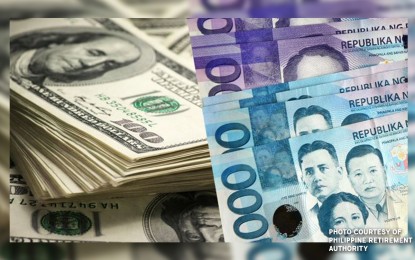
The local currency faced similar pressure, closing at a new record low of 60.3 against the greenback. This marks a further decline from the previous record of 60.1 set last Thursday. Trading had been paused on Friday in observance of Eid al-Fitr.
During Monday’s session, the peso opened at 60.15 and hit an intraday low of 60.37 before averaging 60.26. Total spot market volume reached USD 1.65 billion as corporations and investors scrambled for the safe-haven dollar amid global uncertainty.| PNA