

CLARK AIR BASE, Pampanga — The Philippine Air Force (PAF) and the U.S. Pacific Air Forces (PACAF) officially commenced the first iteration of Exercise Cope Thunder 26-1 on Monday, April 6, marking the start of a two-week bilateral training program aimed at enhancing alliance readiness.
Major General Dennis G. Estrella, Commander of the Air Logistics Command, served as the guest of honor during the opening ceremony at Clark Air Base. The exercise, which is scheduled to run until April 17, involves approximately 2,800 participants from both nations and will conduct primary flight operations over Basa Air Base and various areas across Northern Luzon.
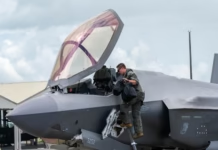
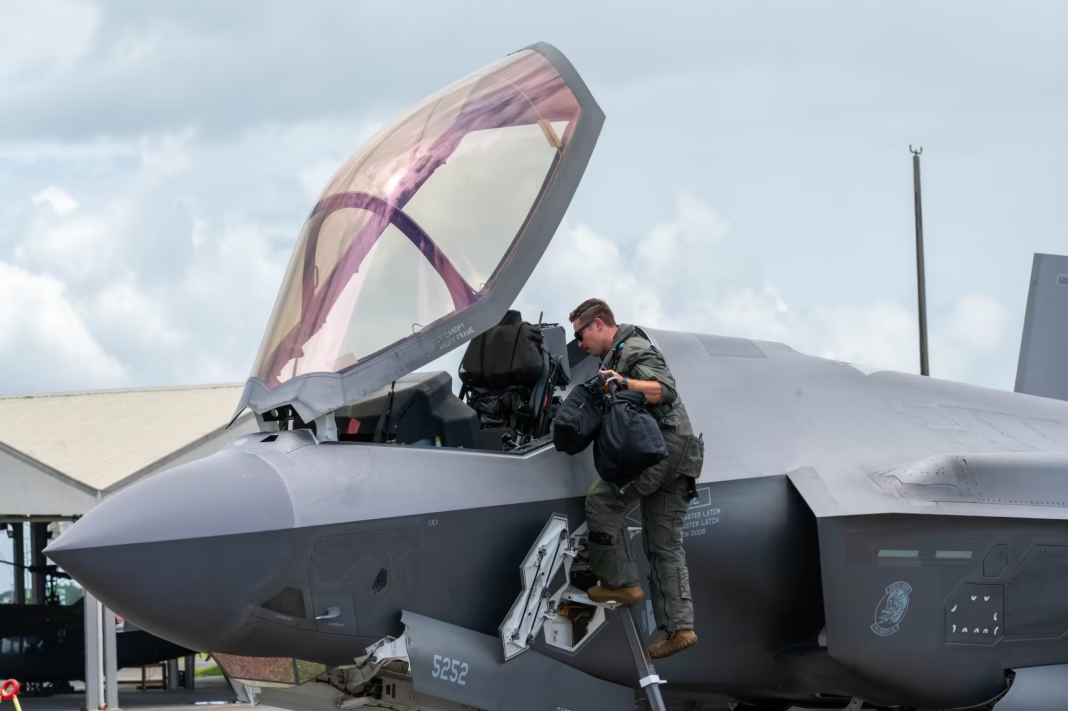
A key, high-intensity highlight of the exercise involves an aerial engagement between the PAF’s FA-50 fighter jet and the PACAF’s F-22 Raptor, testing tactical agility. This specific engagement is designed to integrate the distinct capabilities of both air forces through high-intensity maneuvers and tactical exchanges, building upon a defense alliance that dates back to the 1951 Mutual Defense Treaty.
Major General Estrella emphasized that this iteration serves as a vital platform for refining the PAF’s operational capabilities and ensuring a collective readiness to maintain peace and stability in the region. The training follows the historical trajectory of Cope Thunder, which originated in the Philippines in 1976 before relocating to Alaska in 1992 and eventually resuming local operations in 2023.
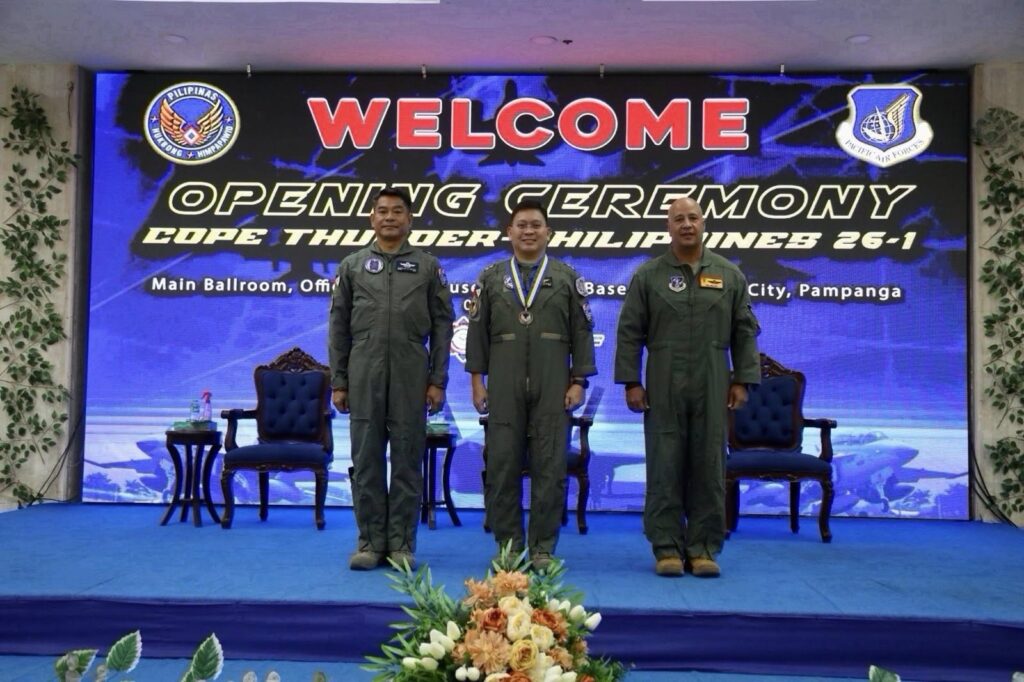
Leading the respective contingents for this year’s maneuvers are Brigadier General Angelito R. Retuta for the Philippine Air Force and Brigadier General Phillip L. Mallory, Hawaii Air National Guard Commander, for the U.S. PACAF. The exercise serves as a distinctive platform to integrate forces and enhance the shared vision of maintaining security, stability, and prosperity throughout the Indo-Pacific region.
As flight operations begin, the Philippine Air Office reiterated that the U.S.-Philippines Alliance supports regional and global security by increasing readiness, strengthening deterrence, and fostering a peaceful environment. The maneuvers over the next twelve days are expected to focus on combined interoperability, ensuring that both air forces remain prepared for a wide range of security challenges.| Sheenalei Briana Rayos