
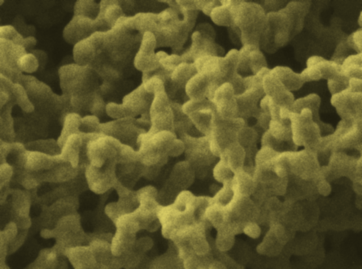

Scientists from the University of the Philippines – Diliman College of Science (UPD-CS) have pioneered a simpler, faster, cheaper, and more eco-friendly method to fabricate gold nanocorals by using natural, low-cost acids in water at room temperature.
Gold nanostructures have unique properties that depend on their shape. Branched structures resembling tiny corals, particularly gold nanocorals, have been proven valuable in applications such as chemical detection (SERS-based), fluorescence imaging, and catalysis. However, their production often involves complex, costly, and environmentally harmful processes.
Christian Paul Ende, Rufus Mart Ceasar Ramos, Phil Justin Pangilinan, Rogie Bautista, and Dr. Michelle Regulacio of the UPD-CS Institute of Chemistry (IC), along with John Rae Louis Escosio of the UPD-CS Natural Sciences Research Institute (NSRI) and the UPD-CS Materials Science and Engineering Program (MSEP), investigated innovative and eco-friendly ways to produce gold nanocorals.
“The key ingredients involved are biogenic acids that are commonly found in plants. Using the right combination of low-cost biogenic acids, we were able to produce hyperbranched gold nanocorals in water under ambient conditions, with the entire procedure completed in less than an hour,” shared Dr. Regulacio.
The research provides valuable insights into the specific chemical structures, known as functional groups, that play an important role in shaping gold nanocorals into their highly branched forms (hyperbranched morphology). By gaining a deeper understanding of how these functional groups facilitate hyperbranched growth, scientists can better control the formation of these nanostructures.
“This work demonstrates that the creation of complex morphological designs does not necessarily require complicated and expensive fabrication processes,” said Dr. Regulacio. She clarified, however, that the procedure reported in the study does not produce nanocorals from other metals.
The researchers predict that this breakthrough is projected to spur scientific interest in hyperbranched nanomaterials and open up potential applications in various fields.
Their paper, “A systematic study on the use of biogenic acids in directing the hyperbranched growth of Au nanocorals,” was published on CrystEngComm, a journal featuring studies on the design and understanding of solid-state and crystalline materials. The research was funded by the Natural Sciences Research Institute.|