

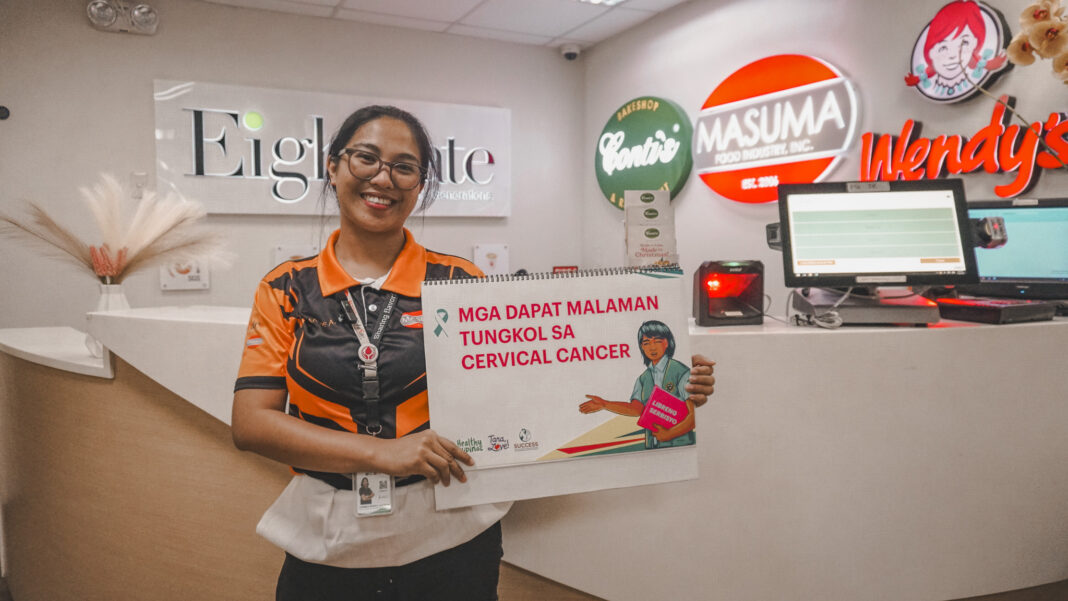

TAGUIG CITY, Philippines — A new workplace-based health initiative is improving access to cervical cancer screening by bringing HPV DNA testing directly to women employees, addressing one of the most common barriers to early detection—limited time to visit health facilities.
The program is part of the expanded Philippines Centralized Laboratory Model for HPV DNA Screening (CLAMS 2) Project implemented by Jhpiego in partnership with the Taguig City Health Office, private companies, and civil society groups. Health officials say the approach strengthens secondary prevention by integrating screening into everyday work environments.
Under the initiative, companies such as Eight8Ate Holdings Inc. and Team Pacific Corporation have begun offering workplace-based HPV DNA testing services. Selected human resource personnel and occupational health and safety officers were trained to provide accurate information, ensure informed consent, and guide women through private self-collection procedures while upholding safety and dignity.
Health experts emphasize that early detection remains one of the most effective ways to reduce cervical cancer incidence and mortality. By providing services within workplaces, the program reduces missed screenings and helps women seek care without sacrificing wages or work hours.
Samples collected from participating employees are processed through the centralized laboratory network established under CLAMS 2, ensuring quality testing and proper follow-up through local health systems. The initiative also strengthens coordination between employers and government health units, promoting continuity of care and patient monitoring.
Public health advocates highlight that workplace-based screening can play a critical role in reaching women who might otherwise delay testing due to financial, logistical, or social constraints. Organizers aim to expand the model to additional companies and urban centers, making preventive health services more accessible and routine.
Officials say the program demonstrates how collaboration between public health agencies, employers, and community organizations can help advance national goals toward cervical cancer prevention and improved women’s health outcomes.