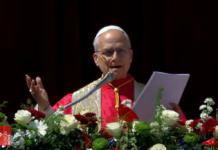



There are moments when a hearing stops feeling like a hearing. It becomes something else—something closer to a story unfolding in real time, except no one knows yet which parts will hold. When Ramil Madriaga began reading his affidavit in Congress, it felt like that kind of moment. Not dramatic in the usual sense, not loud from the start, but heavy. The kind of heaviness you recognize if you have ever been in a room where someone says something that cannot be easily taken back. You do not immediately ask if it is true. You first feel that something has shifted.
And before that moment could even settle, it was already outside—on phones, in chats, in timelines. You know how it goes. Someone sends a screenshot. Another adds a caption. A third says, “Grabe, if this is true.” By evening, people who did not watch the April 14 hearing already had an opinion about it. Not because they are careless, but because that is how information moves now. It does not wait for understanding. It moves ahead of it.
If Madriaga is telling the truth, then this is not just about one person or one office. It is about how things might have been done—quietly, efficiently, without much trace until now. His story is not polished, but it is detailed enough to make you pause. He names places. He recalls amounts. He describes movement. Even if you doubt him, you cannot fully ignore him. It is like hearing someone describe a road you have never taken, but somehow sounds familiar.
Still, doubt does not disappear. It lingers. Madriaga is not the kind of witness people easily trust. There is history there, and history matters. If you are being honest, you would admit that if someone like him approached you in everyday life with a story this big, you would hesitate. You might listen, but you would keep a certain distance. And yet, here is the uncomfortable truth: people on the inside are rarely clean in the way we want them to be. Sometimes, the ones who know the most are also the ones we trust the least. That tension does not resolve itself. You carry it.
Inside the hearing, that stress point appeared in how Rep. Paolo Marcoleta conducted himself. Even with its flaws, the proceeding held to a kind of basic common sense—but he came in loud and certain, often sounding rehearsed rather than grounded. He pressed his claims as if settled, barely engaging with the chair, as though listening were optional. The confidence was visible, but unanchored—sometimes irritating, sometimes almost amusing. In a setting that calls for care and evidence, that kind of performance only adds to the noise.
What stood out, nonetheless, was how much of the proceeding, despite everything, held its ground. It was not perfect, but it did not collapse into chaos. Credit goes to Justice Committee Chair Rep. Gerville Luistro, who kept things steady—firm when needed, but fair enough to let the process move. In that quiet steadiness, something surfaced. Not fully proven yet, but enough to make long-held suspicions feel less like guesswork and more like something worth examining closely.
And that is what makes this difficult to dismiss outright. It is not just what he said, but how it seemed to fall into place—touching on questions people have quietly carried for some time, questions that, until now, did not quite have a clear form. His account did not invent those doubts; it simply gave them shape, detail, and, for some, a kind of uneasy clarity.
It was within that same steadiness that Madriaga’s claims began to take form—piece by piece, not as final conclusions, but as assertions that now ask to be tested, examined, and verified.
He said he functioned as a financial conduit—a “bagman”—with accounts used to receive and move funds on behalf of others. He pointed to a specific amount—₱125 million in confidential funds—allegedly released and distributed within 24 hours, not 11 days as previously reported, raising questions about how such a large sum could move so more quickly with proper documentation.
He described delivering cash, in the millions, not in formal offices but in parking areas, private venues, and informal meeting points. He claimed that some checkered transactions were justified under “intelligence operations,” a category that is legally protected but difficult to scrutinize. He also spoke of coordination with individuals linked to security or protection units assigned to high-ranking officials.
At one point, he waived his bank secrecy rights—an important step that, if pursued, could allow financial flows to be traced beyond testimony. He further alleged possible links to personalities or networks tied to earlier national controversies, including Pharmally and POGO-related entities.
More quietly, his account seemed to cut against earlier public explanations about how the funds were used and when they moved. At the center was his implication—firmly denied, as expected—that these actions were done with the knowledge, benefit, or authority of Vice President Sara Duterte. He also pointed to connections from her time at San Sebastian College of Law, hinting at a longer timeline that still needs careful verification.
In that light, he described VP Sara as someone who did not particularly stand out academically, apparently not as a jab, but as part of a pattern he was seemingly trying to trace. For some, that detail lands in a familiar way. It feels less like background and more like an explanation—something that, in their view, aligns with some critics’ interpretation as the tendency to avoid debates, to sidestep hearings, to shift away from facts, to steer clear of unscripted press conferences where questions cannot be controlled. Whether fair or not, it shows how people are beginning to connect past impressions with present behavior.
These remain claims—serious enough to warrant scrutiny, but still subject to verification. Yet claims this detailed are not easily brushed aside.
Outside the hearing, reactions came fast—as always. Posts went up within hours. Some defended. Others attacked. Trolls infested the social media. Few moved quickly to dismiss what was said, even before the details could sink in. The pattern was familiar—but still troubling.
Because in that rush, we lose space—the space to consider that the claims might hold weight. The space to pause. The space to let evidence catch up.
At the center of all this is a simple question of accountability. If public money is involved, people want to understand where it went. Not in broad statements, but in something they can follow. When that clarity is missing, people begin to fill the gaps themselves. Not always accurately, but almost always quickly.
And that is where the real test lies—not just in the claims, or the denials, or even the politics surrounding them. It lies in whether the system can do what it is supposed to do: verify, examine, and decide based on evidence.
That is why the Senate, if the impeachment moves forward from the House, becomes even more essential—not as a stage for political grandstanding, but as a forum for careful examination, where claims are tested and evidence is weighed.
Because this will not be settled by who speaks first. Or who speaks louder.
Truth does not need volume.
It needs time—and proof.|