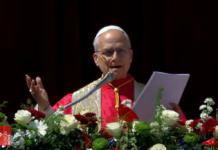



MANILA — The Economy and Development (ED) Council, chaired by President Ferdinand R. Marcos Jr., has officially approved the transition to a three-term school calendar starting in School Year 2026–2027. The move is hailed by economic and education officials as a “critical step” toward stabilizing the country’s learning outcomes.
The policy, initiated by the Department of Education (DepEd) and endorsed by the Social Development Committee-Cabinet Level (SDC-CL), aims to maximize instructional time that is frequently lost to severe weather, local celebrations, and religious observances.
DEPDev Secretary and ED Council Vice-Chair Arsenio M. Balisacan emphasized that the shift is an evidence-based solution designed to bridge persistent educational gaps.
“Our commitment to developing a globally competitive workforce begins with providing evidence-based solutions to bridge educational gaps in our country. We commend DepEd for continuously pursuing initiatives that support critical development priorities,” Balisacan stated.
The reform aligns with the recent findings of the Second Congressional Commission on Education (EDCOM 2). Data from the commission revealed a staggering loss of approximately 53 teaching days during the 2023–2024 school year—equivalent to nearly one full quarter—due to typhoons, extreme heat, and non-instructional holidays.
By streamlining the academic year from four quarters into three terms, the government seeks to provide students with longer, uninterrupted instructional blocks. This restructured timeline is expected to allow for deeper engagement with the curriculum without the rush of frequent grading deadlines and to provide dedicated periods within each term for students to catch up on missed lessons. It is also expected to create space for teachers to pursue professional development and implement targeted “catch-up” initiatives for struggling learners.
Under the approved plan, the 201-day school year will be partitioned as 54 instructional days and a 10-day assessment period for the first term, featuring a 5-day “Opening Block” for baseline assessments and profiling; 55 instructional days and a 10-day assessment period for the second term, and 61 instructional days and a shorter 6-day assessment period for the third term.
Each term concludes with a dedicated assessment and enrichment period, replacing the traditional quarterly examinations with a more structured “End-of-Term Block” for remediation and teacher wellness.
President Marcos has instructed DepEd to ensure the new system remains aligned with the Senior High School semestral structure and continues to uphold the mandated 180-day minimum contact period between teachers and students.| DEPDev