
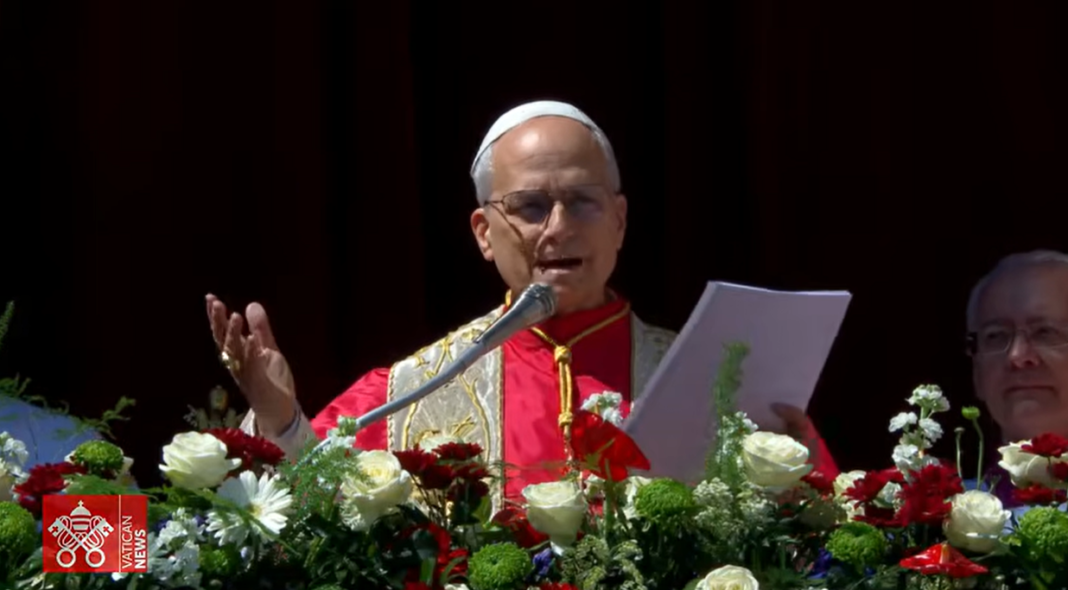

VATICAN CITY — Pope Leo XIV issued a stirring plea for global de-escalation during his traditional Easter Sunday Urbi et Orbi message, calling on those in power to reject the use of force in favor of meaningful encounter. Addressing tens of thousands of pilgrims gathered in a sun-drenched St. Peter’s Square, the Pontiff signaled a firm stance against the rising tide of international conflict and the “globalization of indifference” affecting modern society.
The Pope centered his address on the necessity of non-violent resolution, specifically challenging world leaders to reassess their reliance on military might. “Let those who have weapons lay them down!” the Pope urged, emphasizing that true stability cannot be achieved through coercion. He stressed that the world must strive for a peace that is not “imposed by force,” but rather one achieved through dialogue — “not with the desire to dominate others, but to encounter them.”
Reflecting on the current state of global affairs, Pope Leo warned that humanity is “growing accustomed to violence” and becoming increasingly numb to the human cost of war. He noted that this indifference extends beyond the immediate loss of life to the broader “hatred and division” sown by conflict, as well as the cascading “economic and social consequences” felt globally. Drawing on the legacy of his predecessor, he cautioned against the “ever-increasing ‘globalisation of indifference’,” a phrase originally popularized by the late Pope Francis.
In a direct response to these prevailing tensions, the Pontiff announced he will lead a major prayer vigil for peace next Saturday, April 11th, at Saint Peter’s Basilica. The initiative aims to provide a spiritual focal point for those seeking an end to the “thirst for death” seen in contemporary conflicts. “We cannot continue to be indifferent!” he proclaimed to the crowds. “We cannot resign ourselves to evil!”
The message concluded with a spiritual meditation on the nature of Easter peace, which the Pope described as more than just a political ceasefire. He defined this peace as an inner transformation that “touches and transforms the heart of each one of us.” Entrusting all who suffer to the Lord, Pope Leo XIV made a final appeal for a world governed by a love that “forgives and redeems” rather than the “silence of weapons.”|