
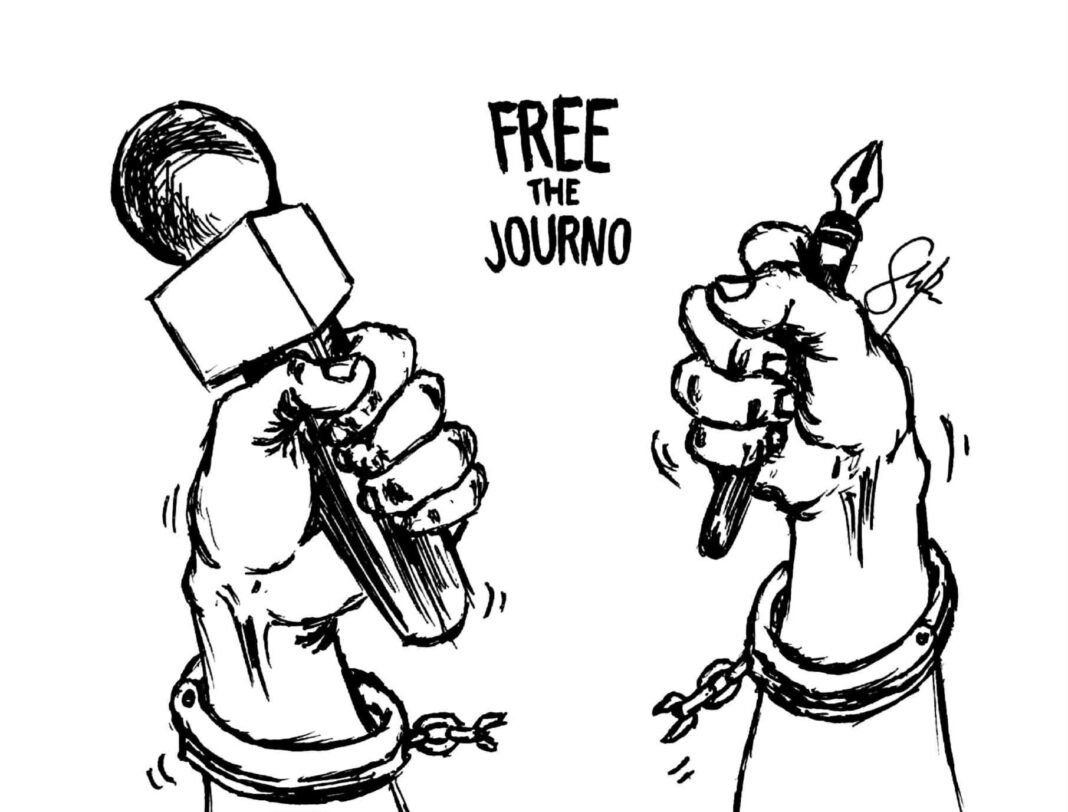

On February 7, Frenchie Mae Cumpio, a community journalist from Leyte, marks her sixth year in detention—an incarceration that rights and media groups strongly believe stems from her work as a journalist.
As a radio broadcaster, Frenchie reported on the lives of farmers, urban poor communities, and disaster survivors in Eastern Visayas—stories rarely covered by national media. This is the democratic function of community journalism: to surface realities from the margins and hold power to account where state oversight is weakest.
That work placed her at risk. Months before the February 2020 raid that led to her arrest, Frenchie reported being tailed by unidentified men and receiving death threats. At the time, Eastern Visayas was under heavy militarization pursuant to former President Rodrigo Duterte’s Memorandum Order No. 32, and Frenchie was documenting alleged abuses against civilians.
Her arrest, prolonged detention, and eventual conviction for terror financing – based largely on testimonial evidence – form part of a broader pattern: the use of terror-tagging and anti-terror laws to blur the line between journalism and criminality. This practice did not end with the Duterte administration. Despite having the power to reverse course, President Ferdinand Marcos Jr. has failed to dismantle the mechanisms that allow such prosecutions to persist.
The case sets a dangerous legal precedent. It signals that reporting on militarization, development projects, or marginalized communities can be recast as terrorism. The result is a chilling effect, particularly for community journalists with limited legal protection.
International press freedom groups have repeatedly warned that Cumpio’s case exemplifies the criminalization of journalism in the Philippines. Reporters Without Borders has described her prolonged detention as emblematic of how terrorism-related charges are used to silence critical and community-based reporting. UN Special Rapporteur on freedom of expression Irene Khan has likewise flagged Cumpio’s case as raising serious concerns over due process and the misuse of security laws to suppress legitimate journalistic work.
This pattern is not isolated. Another journalist, Deo Montesclaros, faces similar terror financing charges after reporting on the adverse impacts of development projects in Cagayan Valley, following red-tagging and surveillance.
Frenchie Mae Cumpio’s continued detention is not only an injustice against one journalist. It is an assault on press freedom, community journalism, and the public’s right to know. When journalism is criminalized, entire communities are silenced –and democracy is further diminished. #
*This pooled editorial is adapted by members of the Movement for Media Safety Philippines, a network of media organizations advocating for journalists’ safety and press freedom, together with its allied and partner organizations.
- Altermidya – Alternative People’s Media Network
- Asian Institute for Journalism and Communication
- Center for Community Journalism and Development
- Center for Media Freedom and Responsibility
- Foreign Correspondents Association of the Philippines
- Mindanews
- National Union of Journalists of the Philippines
- Philippine Center for Investigative Journalism
- Philippine Press Institute
- The Peace and Conflict Journalism Network (PECOJON)
- University of the Philippines College of Media and Communication
- VERA Files
- Luzonwide News Correspondent
- Balitang Hilaga
- Balikas News
- Kabayan News
- The Metro Times