

By Eunice Jean C. Patron
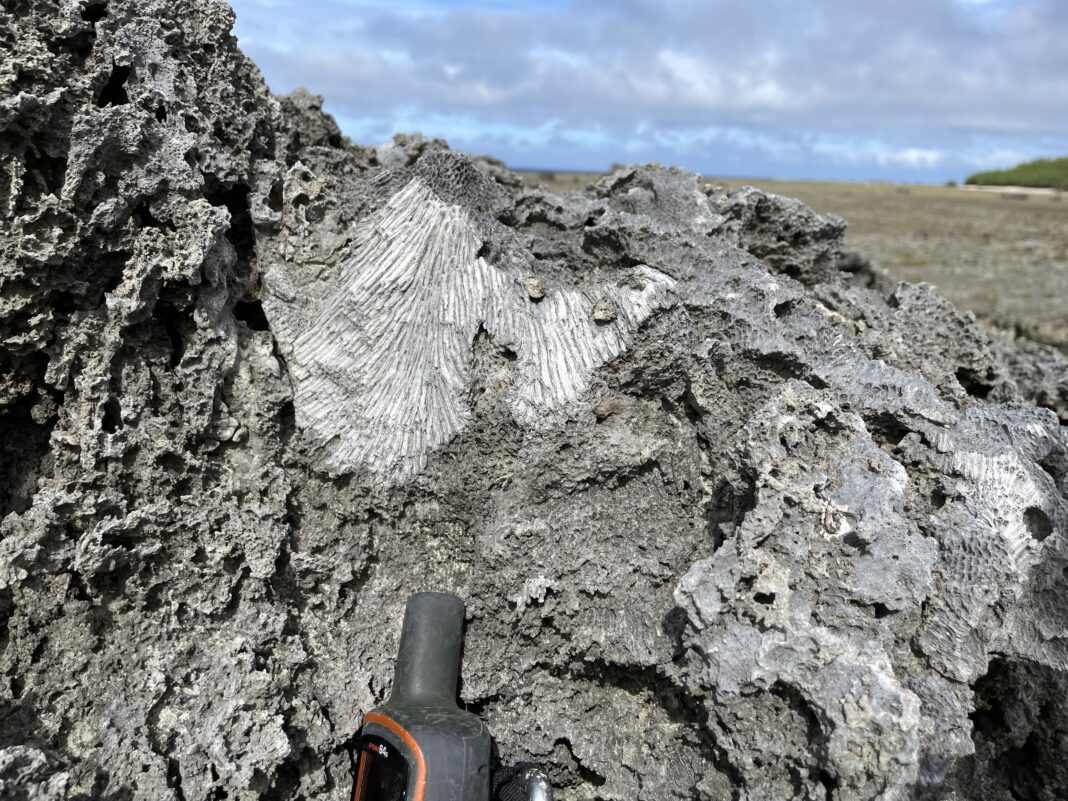
PASUQUIN, Ilocos Norte — Massive coral boulders scattered along the rocky coastline of Pasuquin are helping scientists reconstruct the history of powerful waves that once battered northern Luzon, according to a new study by researchers from the University of the Philippines Diliman College of Science’s National Institute of Geological Sciences (UPD-CS NIGS).
Some of the boulders—each weighing as much as a large truck—sit far inland on an uplifted reef platform, suggesting they were torn from ancient coral reefs and hurled ashore by extreme waves such as tsunamis or severe storms. Intrigued by the unusual formations, a team from the Geomorphology and Active Tectonics Research (GEAR) Laboratory, together with international collaborators from Germany and Taiwan, examined 198 carbonate boulders in Barangays Davila and Dilavo.
Researchers measured the size, weight, and location of the fossil coral fragments and used specialized dating techniques to determine when the boulders were transported inland. According to lead researcher Edrian Tubalado, the boulders serve as long-term records of extreme wave events because their massive size prevents them from being easily moved by ordinary storms.
One documented boulder weighed about 31 tons, highlighting the immense force of waves capable of reshaping coastlines. The findings suggest that past extreme waves in Pasuquin may have reached heights of up to four meters or more.
The research also identified coastal features—such as embayments and steep nearshore slopes—that intensified wave energy and increased the risk of damage. Scientists said these insights can help local governments improve hazard preparedness through better evacuation planning, building standards, and resilient coastal infrastructure.
Published in the journal Marine Geology, the study contributes to a deeper understanding of coastal hazards in the Philippines, where historical records are limited. Researchers emphasized that as climate change potentially intensifies storms, geological evidence from ancient boulder deposits can help communities anticipate future risks and strengthen long-term disaster resilience.|