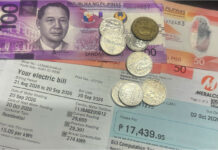

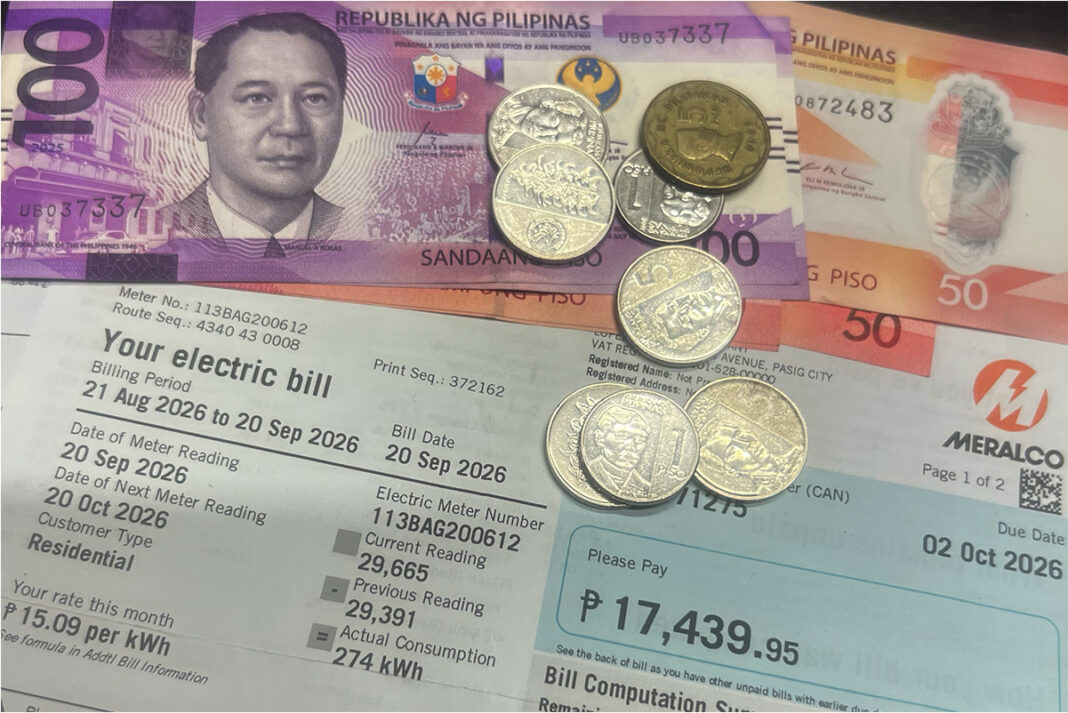

MANILA — The Energy Regulatory Commission has approved an average distribution rate of P1.48 per kilowatt-hour (kWh) for Meralco and a separate P2.64-billion consumer refund, the utility said as it announced higher electricity rates for October.
The approved average distribution rate covers the regulatory period from July 1, 2026 to June 30, 2030. Meralco said it had yet to receive the commission’s decision but welcomed the development after more than 15 years without a rate reset.
Meralco Senior Vice President and Head of Regulatory Management Jose Ronald V. Valles said the decision would provide greater clarity for investments in distribution network modernization.
Projects outlined in the utility’s application include advanced metering infrastructure, cybersecurity and other network improvements intended to strengthen reliability and operational efficiency.
The company said its actual distribution charge had not increased over the 15-year period and had instead declined to P1.35 per kWh effective 2016.
Meanwhile, the P2.64-billion refund will begin with November 2026 billing, equivalent to an average P0.1020 per kWh across customer classes and P0.1733 per kWh for residential customers. It will run for six months or until the full amount is returned.
The refund covers January to June 2026 and reflects adjustments between Meralco’s actual weighted average tariff and its approved distribution tariff during that lapsed period.
“We welcome the regulator’s prompt action on our latest refund application, which we hope will give immediate relief to consumers,” Valles said.
For October, Meralco’s overall household rate increased by P0.3191 to P15.0615 per kWh, driven by a P0.4973-per-kWh rise in generation charges.
Higher liquefied natural gas costs, peso depreciation and increased spot-market charges pushed generation costs upward. Lower Power Supply Agreement charges and reductions in other bill components partly offset the increase.
Meralco said generation, transmission and ancillary service charges are passed through to power suppliers and the National Grid Corporation of the Philippines.| – BNN Integrated News