
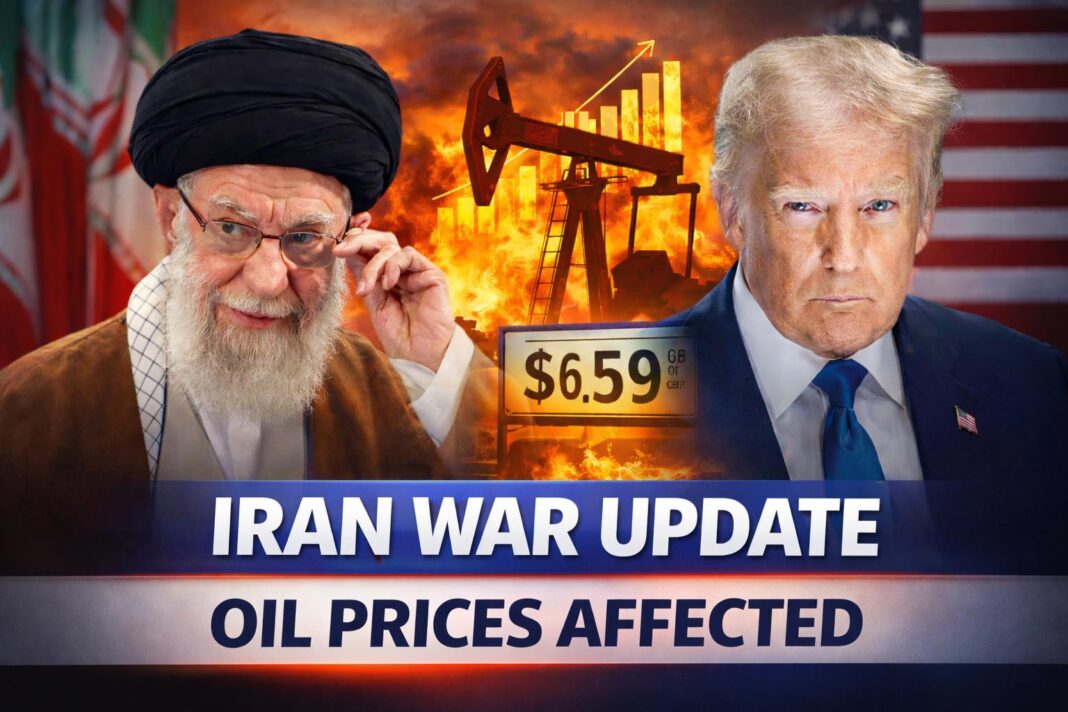

WE are now on day four of this conflict. As we all know, the United States and Israel are conducting joint military operations targeting top Iranian officials and strategic infrastructure. During the opening phase of the war, Iran’s Supreme Leader was killed in an airstrike.
However Iran is fighting back very hard. It has bombed American targets and military bases in several countries that are known as GULF STATES.
These countries include: Saudi Arabia, United Arab Emirates, Qatar, Iraq, Bahrain, Kuwait and Oman.
These countries are called Gulf states because they are located along the PERSIAN GULF.
The Persian gulf is a large body of water located between Iran and the Gulf States. Remember the Gulf States are the countries listed above.
Those countries matter a lot to the world. Together, they produce about one-third of all the oil we use globally. Saudi Arabia alone pumps out over ten million barrels a day.
When they get hit, prices go up fast. Gulf nations aren’t just countries; they’re the world’s gas station.
What’s even worse is that Iran is now disrupting traffic in an area called the STRAIT OF HORMUZ.
The Strait of Hormuz is a narrow waterway between Iran and Oman.
You see, when oil ships leave the Gulf countries, they pass through the Strait of Hormuz. Iran says it will attack any vessel trying to pass. So now ships are scared to go through the Strait of Hormuz. Traffic has dropped significantly. If it stays blocked, oil can’t flow out easily from the Gulf states. As we speak, oil prices are skyrocketing.
Oil controls the global economy. It is the blood of economic activity. Higher oil prices make transport and production more expensive. Oil is used for fuel, electricity, factories, farming, and shipping. So when oil becomes expensive, many other things also become expensive. Poor countries suffer the most because they buy fuel from other countries. They also do not have enough money to handle sudden price increases.
The Strait of Hormuz isn’t owned by one country. Iran controls the north side, Oman controls the south. It’s supposed to be open to all ships under international rules. Oman stays neutral, it doesn’t pick sides between Israel and Iran. In fact, Oman often helps to sort things out between Iran and other countries but it hasn’t been spared in Iran’s retaliatory strikes.
By the way, some of the Gulf States are American allies (Saudi Arabia and UAE). Iran hates that a lot. It sees it as encirclement. In geopolitics, no country wants to be neighbors with a friend of the enemy.
Meanwhile, an organization called HEZBOLLAH, which is based in Lebanon, has started firing hundreds of rockets and missiles into northern Israel in retaliation for the death of the Iranian Supreme Leader. Israel has responded by launching counter attacks inside Lebanon, further escalating the war into a full blown regional crisis.
Incase you didn’t know, Hezbollah is a powerful Shia militant group and political party in Lebanon. It is backed, trained and funded by Iran. This group is actually more like Iran’s armed wing outside its borders. It has been clashing with Israel for a long time.
Why is Iran bombing Gulf States?
Iran wants to make the war so expensive that the United States and Israel will feel forced to stop attacking and start negotiating. At the same time, Iran knows that higher oil prices hurt everyone, including its allies. So it hopes that the whole world feels the pain and starts pressing the U.S. and Israel to seek a negotiated solution. Not because everyone loves Iran, but because no one wants the Strait of Hormuz closed or fuel costs to keep rising.
However, if Donald Trump’s latest statements are anything to go by, then this conflict is not wrapping up soon. Yesterday he said the plan was four to five weeks, but added that America can go far longer than that if needed. He threatened to unleash unlimited, ferocious strikes until Iran’s missiles, navy and nuclear program are destroyed. There is no real talk of a ceasefire yet. It seems Trump is open to talks with whoever takes over in Iran, but only after the current government of Iran is either removed or significantly weakened.
Meanwhile, this war has caused a minor diplomatic rift between the UK and the USA. President Trump criticized the UK Prime Minister, saying he was too slow to allow the United States to use British bases for attacks on Iran. He described the delay as frustrating.
The UK Prime Minister responded by saying that Britain would not commit troops unless the action was lawful and there was a clear plan for what would happen afterward. He added that the UK does not want to repeat past mistakes like the 2003 invasion of Iraq, which removed Saddam Hussein from power. This just shows you how complicated and far reaching this conflict is.|