
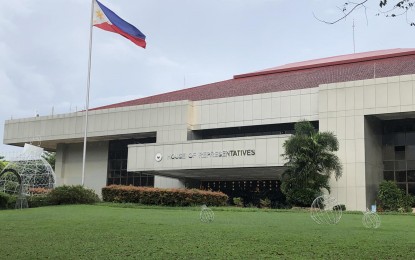

MANILA, Philippines — The House of Representatives on Wednesday evening approved on third and final reading the House Bill (HB) No. 9465, also known as the proposed Digital Media Anti-False Information Act, voting 286-3 with seven abstentions.
The proposed law is a priority measure under the Legislative-Executive Development Advisory Council (LEDAC). It institutes severe penalties, including imprisonment ranging from six to 12 years and fines between PHP 500,000 and PHP 2 million, for individuals found guilty of knowingly creating, financing, directing, or materially assisting in the spread of false information intended to cause verifiable public harm or threaten national security.
A central pillar of the legislation is its targeted approach toward coordinated digital manipulation operations, explicitly naming troll farms, bot networks, and fake account syndicates designed to distort public discourse.
Furthermore, the bill expands coverage to synthetic and manipulated content, placing strict transparency requirements on AI-generated images, videos, and audio presented as genuine material without proper disclosure.
The bill also addresses external security threats by penalizing covert foreign influence operations that secretly spread false information on behalf of foreign governments, military actors, or foreign-funded organizations. It prohibits the impersonation of critical public and private entities, including government agencies, election authorities, law enforcement offices, public health institutions, media organizations, and private citizens.
The bill mandates that digital platforms operating within the Philippines establish accessible complaint mechanisms, publish transparency reports, and provide clear avenues for appeal and redress.
Under the institutional frameworks of the bill, the Department of Education (DepEd) and the Commission on Higher Education (CHED) are tasked with integrating media and digital literacy into nationwide educational curricula.
Simultaneously, government agencies will be legally bound to maintain open-data mechanisms and promptly correct any inaccurate public statements issued by their offices.
House Majority Leader and Ilocos Norte Rep. Ferdinand Alexander “Sandro” Marcos, the principal author of the bill, stated that the passage of HB 9465 reflects the chamber’s resolve to address digital deception under the leadership of Speaker Faustino “Bojie” Dy III while protecting constitutional liberties.
Marcos emphasized that the legislation distinguishes deliberate deception from lawful public discourse. “No Filipino should fear expressing an opinion, criticizing government, questioning public officials, or participating in democratic debate. What this bill goes after are those who knowingly weaponize falsehoods to deceive the public, destroy reputations, manipulate public behavior, and place lives, livelihoods, and institutions at risk,” he stated.
Speaker Dy reinforced this sentiment, assuring the public that safeguards are in place to preserve civil liberties. “It does not punish criticism, dissent, political opposition, journalism, or honest mistakes. What it targets are deliberate and coordinated efforts to deceive the public and inflict harm,” the Speaker from Isabela said.
The approved bill will now be transmitted to the Senate for its consideration.| PNA