

INTERNATIONAL summits provide the Philippines an opportunity to showcase not only its economic potential but also the strength of its democratic institutions.
That strength, however, is measured not by the absence of dissent, but by how authorities respond to it.
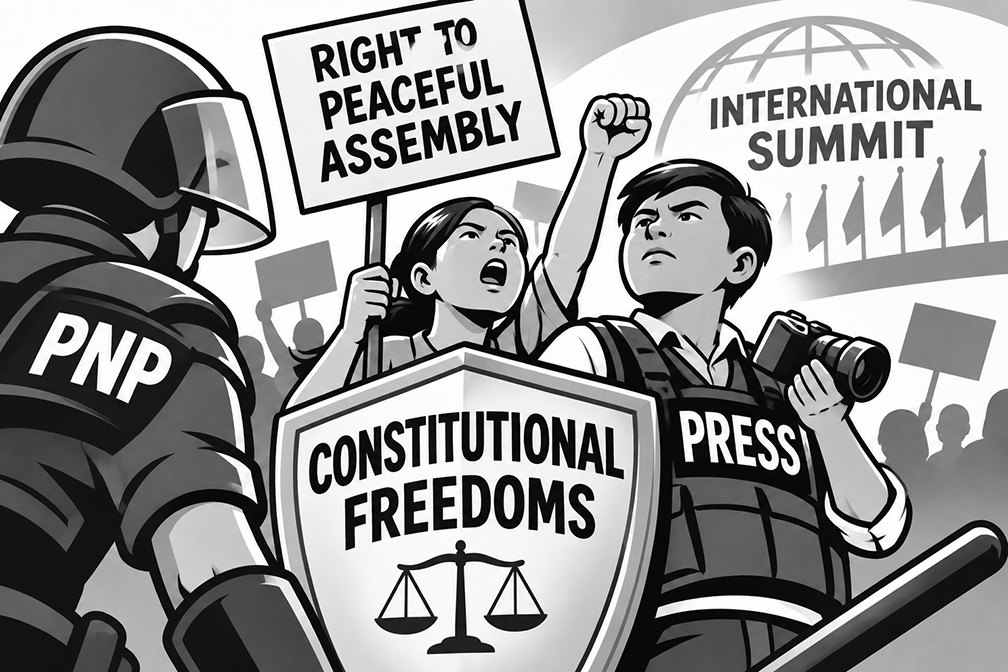
Reports from the National Union of Journalists of the Philippines concerning police harassment of journalists covering protest actions during international gatherings raise serious concerns about respect for constitutional freedoms.
Peaceful assembly is a right, not a privilege granted at the convenience of authorities. Similarly, journalists covering demonstrations are performing a legitimate public service, not necessarily participating in the protests themselves.
Campus journalists deserve the same respect and protection afforded to other members of the press.
The Philippine National Police has a responsibility to maintain peace and order, particularly during international events. But security measures must remain proportionate, lawful, and respectful of fundamental rights.
Allegations of harassment, intimidation, and unjustified arrests warrant an impartial investigation. Accountability must follow wherever violations are established.
A government does not demonstrate stability by suppressing criticism. It demonstrates democratic maturity by allowing opposing voices to be heard without fear of retaliation.
International visitors should see a nation confident enough to accommodate dissent, transparent enough to welcome independent reporting, and disciplined enough to exercise police authority within constitutional limits.
The country’s international image is best protected by respecting the very democratic principles it professes to uphold.
Summits come and go. Constitutional freedoms must endure.
Democracy does not take a holiday simply because foreign dignitaries are in town. [Syndicated Editorial for BNN Media Group and affiliates]