
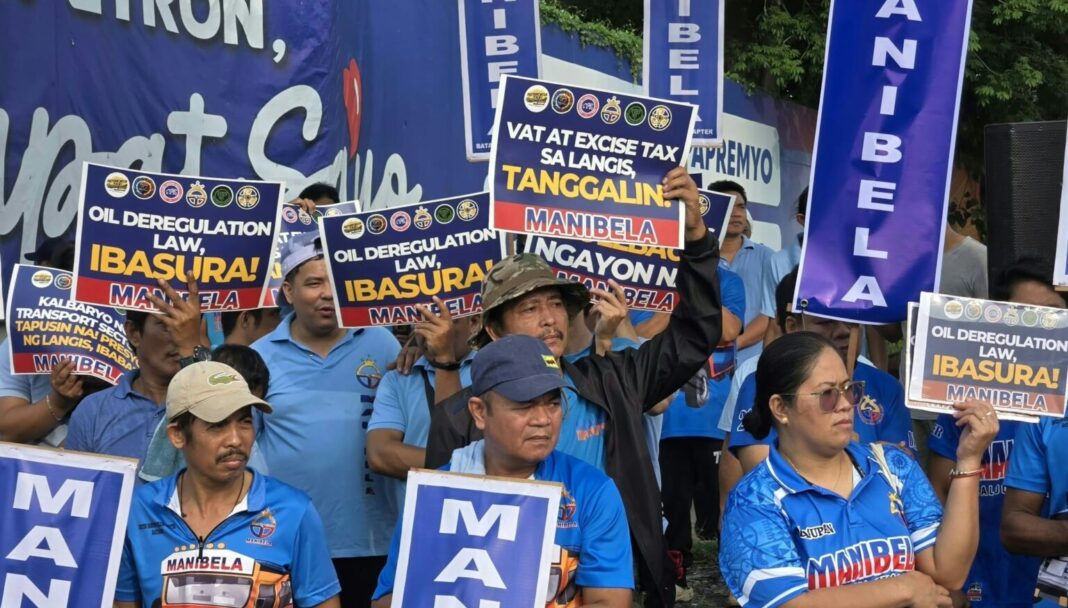

MANILA — Higher public transport fares took effect Monday but failed to immediately end protests over fuel costs, with Manibela launching its strike before calling off its planned Tuesday-Wednesday action and Piston preparing for a two-day nationwide strike.
The Land Transportation Franchising and Regulatory Board implemented new PUV fares effective Sept. 28. Traditional jeepney minimum fares increased from ₱13 to ₱14, while modern jeepney fares rose from ₱15 to ₱17 for the first four kilometers.
The adjustment also covers buses, TNVS, airport taxis and point-to-point services. For city buses, ordinary fares for the first five kilometers rose to ₱15, while air-conditioned city buses now charge ₱18 for the first five kilometers.
Transport groups, however, say the adjustments remain insufficient to offset the increase in fuel and operating costs.
Manibela chairperson Mar Valbuena has sought a larger fare increase, while Piston is proceeding with its own nationwide strike on Sept. 29 and 30. Piston president Mody Floranda has estimated participation at 70,000 to 100,000 drivers and operators.
The developments underscore the economic pressure facing the country’s public transport sector, where fuel represents a major operating expense while higher fares directly affect household transportation budgets.
The government has sought to balance the financial concerns of drivers and operators with the impact of higher fares on commuters.
Presidential Communications Office Undersecretary Claire Castro said the administration considered the approved increase reasonable given the circumstances, while seeking to prevent a larger burden on passengers.
The Philippine National Police has also activated public safety and commuter assistance measures in areas expected to be affected by the strikes.
The Department of Transportation and local governments have also prepared free-ride and commuter assistance measures in affected areas.
For the transport industry, the dispute highlights a broader cost problem: fare adjustments provide additional revenue per passenger, but sustained fuel-price increases can continue to erode operators’ margins. At the same time, larger fare increases risk raising transportation costs for workers, students and other daily commuters.
The coming Piston strike will provide another test of how the government and transport sector manage the competing pressures of operating costs, driver income and commuter affordability.| BNN Integrated News