

MANILA, Philippines — The government is moving to establish strict boundaries between power generation sites and food production zones to ensure the country’s aggressive shift toward renewable energy does not threaten local food security.
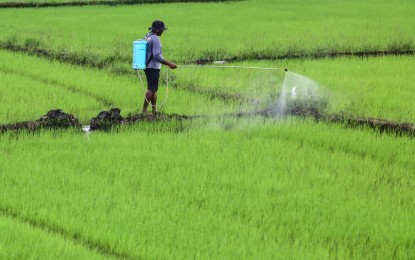
In a joint initiative announced on Monday, the Department of Agriculture (DA) and the Department of Energy (DOE) proposed the creation of a “digital geofence” around an estimated three million hectares of flat, rice-growing farmlands. The mapping system is designed to guide energy developers away from restricted agricultural zones and steer them toward suitable alternative areas ahead of the upcoming Green Energy Auction.
The policy direction stems from recent discussions between Agriculture Secretary Francisco Tiu Laurel Jr. and Energy Secretary Sharon Garin, who are seeking ways to expand the nation’s solar energy capacity without encroaching on prime agricultural real estate.
“Kailangang mapanatili ng bansa ang suplay ng kuryente nang hindi nalalagay sa panganib ang mga lupang nagbibigay ng pagkain sa mga hapag ng mga Pilipino (The country needs to maintain its power supply without putting at risk the lands that bring food to the tables of Filipinos),” Tiu Laurel said.
To operationalize the plan, the DA will identify between 1,000 and 2,000 priority agricultural sites. These mapped locations will be cross-referenced with a list of ongoing and awarded DOE projects to prevent overlapping land use and assist regional agriculture officials in distinguishing approved developments from pending energy proposals.
Beyond land preservation, the inter-agency effort seeks to deliver direct economic relief to the agricultural sector by lowering prohibitive electricity costs. The DA and DOE are actively coordinating with the Energy Regulatory Commission (ERC) to explore mechanisms that would link renewable energy suppliers directly to agricultural users, targeting facilities where power expenses heavily impact total production costs. These include irrigation systems, post-harvest facilities, rice mills, cold storage plants, hatcheries, and slaughterhouses.
Agriculture Undersecretary Roger Navarro and Energy Undersecretary Rowena Cristina Guevarra have been directed to formulate a comprehensive farm-to-energy framework in collaboration with the ERC. Both departments aim to formalize the partnership through a memorandum of agreement slated for signing in October 2026.
Reflecting on the long-term impact of the framework, Tiu Laurel noted that the move “ensures that both critical needs of Filipinos are met in a way that benefits the country without sacrificing one for the sake of the other“.| (PNA)